

Glass Firing Schedules
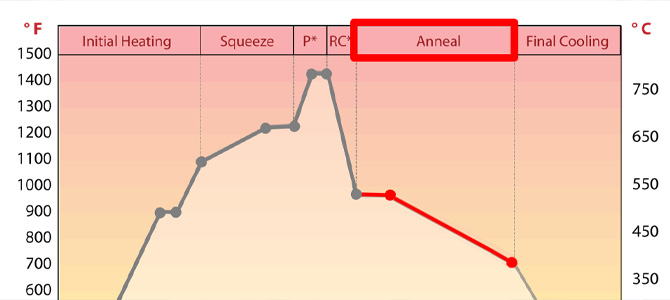
Why Bother? We all know that it’s true, so let’s just put it out there: You don’t want to be here reading a tutorial about firing schedules when there are so many more interesting topics on the other pages of this website. So, before I lose you to pressed glass, faux stone, or photos cats with silly captions, consider these two simple facts:
-
As a full-time kilnformed glass instructor I see a lot of fusing “failures” and, by a very wide margin, most are the result of a the artist using an incorrect firing schedule.
-
Many of the firing schedules being shared online, churned out by software, and even taught in some classrooms are marginally useable. More than a few are downright terrible.
When you consider the cost (in both time and money) of losing your work to a bad firing, it is easy to become frustrated. Here’s the good news: Understanding firing schedules and recognizing a bad one requires no math skills. All it takes is a little information and some common sense. This tutorial provides the information. It may also help to put you at ease to know that almost nobody creates firing schedules from scratch. I certainly don’t and I sometimes fire hundreds of different glass projects every single week. Engineers who understand advanced mathematics, thermal dynamics, and phrases like “tensile at the mid-plane” and “parabolic variation” create firing schedules. Our job is much simpler: 1. Recognize a good firing schedule. 2. Adapt it to the project at hand. This Tutorial will help you to do both.